Tuscany Italy Hotel Tuscany Italy Tuscany Tuscany Italy Tuscany hotels Italy Tuscany Castiglioncello
         
Versione italiana Toscana   English Version Tuscany
         
Hospitality in Tuscany
Residenza Solferino
Hotel Leopoldo
   
The territory
Arezzo
Baratti
Bibbona
Bolgheri
Campiglia Marittima
Casale Marittimo
Castagneto Carducci
Castellina Marittima
Castiglioncello

Cecina

Donoratico
Firenze
Follonica
Guardistallo
Isola di Capraia
Livorno
Lucca
Massa Marittima
Meloria
Montenero
Montescudaio
Piombino
Pisa
Pitigliano
Populonia
Riparbella
Rosignano
San Gimignano
San Vincenzo
Sassetta
Siena
Suvereto
Volterra
Versilia
 
Museum in Tuscany
Arezzo Museum
Florence Museum
Grosseto Museum
Livorno Museum
Lucca Museum
Pisa Museum
   
History
Tuscany History
   
Etruscan's Coast
Art Nature Culture
Events
Etruscan and Tuscany
The Sea
The Nature
Etruscan's Coast Map
Sea Nature Art History
   
Wine and Gastronomy
The Wine Road
Tuscanian Wine
Chianti Colli Fiorentini
Chianti Colli Pisani
Where to purchase the Tuscanian Wine
Enoteche
Tuscany Cooking Traditions
Florence Restaurants
Livorno Restaurants
Pisa Restaurants
 

Tuscany coast

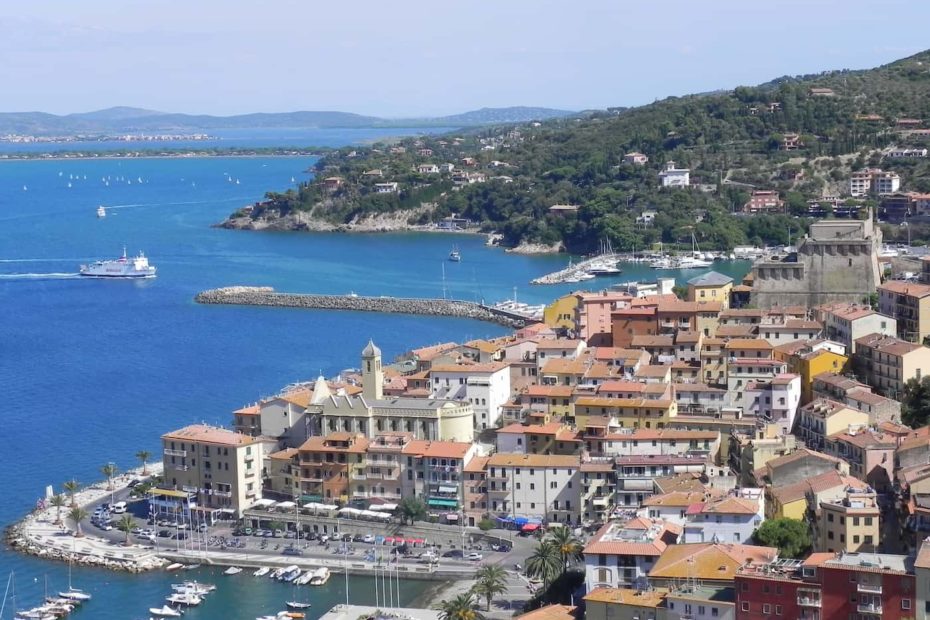
To think that the Etruscan Coast is made up of only the sea and beaches is a big mistake :in- fact,here we are in a very complex territory,where nature and art recount the history of thousands of years.This is the land that enchanted the Etruscans,who lived there and explotted its enormous wealth.The Etruscans discovered the mines of the Fucinaia Valley,near Campiglia,and they are the ones who began the growing of olives and the viticulture that over the centuries have shaped the landscape of the hills of this area as they rise behind the sea.The powerful Etruscan fleet ploughed the Tyrrhenian Sea,sailing from the harbours of Vada and Baratti,while already in the 5th century Populonia coined its own money.After the end of the Etruscan period,this part of the Tuscan coast went under the first Roman domination,and then saw the birth of the feuds in the early Middle Ages.
A great number of castles and fortified villages built up on these hills are still in existence.to the point that it is along the Etruscan Coast that the most significant examples of Medieval architecture of all Tuscany can be traced.
And probably it is not by chance that the oldest Italian family living today,that of the Della Gherardesca counts,Longobard in origin,had chosen to live just in front of this strip of the Tyrrhenian Sea.So this territory is rich in artistic evidence of several epochs,but it is also an area of remarkable naturalistic value,where oases and parks protect the local “Mediterranean maquis” and the numerous animal species that still live here.
Art and nature,traditions and enogastronomy:the
Etruscan Coast is a continuous discovery,and not only during the summer months,the charming well-known way was for more than seven centuries the route of kings,emperors,monks and nuns or simple wayfarers.
It was around the year 1000 tha the religious unrest in Europe led to devotional journeys with precise destinations:Rome,the site of the martyrdom of St. Peter and St. Paul and,arguably,the lighthouse of Christianity;the Holy Land,in search of the pleaces of Christ’s passion;Santiago di Compostela,the extreme western point of the continent beyond which it was though no other lands existed,and where the Apostle James had been buried.
If not originating with this route,the famous saying “All roads lead to Rome “ certainly founf confirmation in it.
Entering Italy from the Valley of Aosta,the Francigena Way descended towards Rome through Piacenza,Parma,Lucca,Pisa,Pistoia,Florence and Siena,crossing then the Val di Chiana.
The route barely reached Pienza,while it touched Montepulciano and Chianciano Terme before bending south in the direction of Bagno Vignoni,Radicofani,Viterbo and finally Rome.

 
Leopoldo Hotel Castiglioncello Toscana Italia
Residenza Castiglioncello Toscana Italia
Ristorante Bagnetti Livorno


Home | Toscana | Tuscany | Ciao Ciao Italy for hotel in Tuscany